In the bustling world of culinary arts, where complexity often takes center stage, there exists a humble yet transformative formula that has quietly revolutionized home cooking and professional kitchens alike: the universal dressing ratio of three parts soy sauce, two parts vinegar, one part sugar, and one part minced garlic. This deceptively simple combination has become the secret weapon for chefs and food enthusiasts seeking to elevate everything from crisp vegetables to succulent proteins with minimal effort and maximum flavor impact.
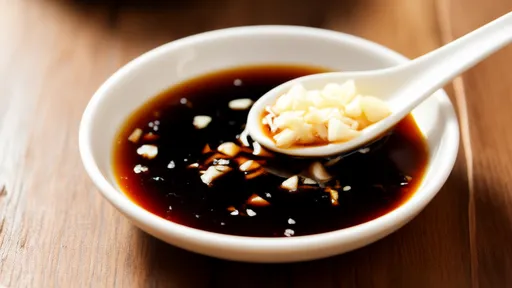
The magic begins with soy sauce, the salty, umami-rich foundation that anchors the entire mixture. Not all soy sauces are created equal—light soy sauce typically works best for dressings, as its saltier, thinner consistency blends seamlessly without overpowering other components. Traditional brewers still age their soy sauce in wooden barrels for months, sometimes years, developing complex flavor profiles that commercial mass-produced versions simply cannot replicate. The three-part measurement provides just enough salinity to enhance natural flavors without making dishes taste overtly salty.
Vinegar enters the equation as the bright counterpoint to soy sauce's depth, with the two-part measurement creating perfect harmony. Rice vinegar remains the preferred choice for its mild acidity and subtle sweetness, though adventurous cooks might experiment with black vinegar for its malty complexity or apple cider vinegar for fruity undertones. The acidity doesn't merely add tang—it actually helps balance the palate and can make accompanying ingredients taste fresher and more vibrant. Food scientists have noted that the specific acidity level achieved with two parts vinegar effectively tenderizes proteins while brightening vegetable fibers.
Sugar might seem like an unlikely participant in a savory dressing, but the single portion performs multiple crucial functions beyond mere sweetness. It rounds out the sharp edges of the vinegar and soy sauce, creates a more viscous texture that clings to ingredients, and promotes beautiful caramelization when used as a marinade for grilled foods. Many professional kitchens use superfine sugar that dissolves instantly, though brown sugar, honey, or even maple syrup can introduce fascinating flavor variations while maintaining the structural integrity of the formula.
Then comes the garlic—the aromatic soul of the dressing. Freshly minced garlic delivers pungent warmth that mellows beautifully when combined with the other ingredients, transforming from aggressively sharp to complexly fragrant. The single portion measurement provides noticeable presence without overwhelming other components. Food historians have traced the use of garlic in similar preparations back to ancient Silk Road trade routes, where it was valued both for its flavor and purported medicinal properties.
What makes this combination truly universal is its incredible adaptability across culinary traditions. In Southeast Asia, cooks might add fish sauce and lime juice to create a vibrant dipping sauce for spring rolls. Korean kitchens often incorporate gochujang for spicy bibimbap dressings, while Japanese variations might include mirin and grated ginger for sushi accompaniments. Mediterranean interpretations frequently feature olive oil and lemon juice, creating something reminiscent of a Greek salad dressing with Asian undertones.
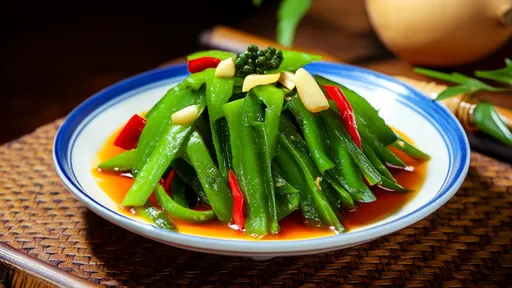
The dressing's versatility extends beyond geographic boundaries into various cooking techniques. As a marinade, the acidity tenderizes meats while the sugar promotes caramelization during cooking. When tossed with vegetables, it simultaneously seasons and lightly pickles them, creating complex textures and flavors. Even as a finishing sauce drizzled over cooked dishes, it adds moisture and brightness that ties all elements together beautifully.
Food chemistry helps explain why this particular ratio works so consistently well. The combination hits all five basic tastes: salty from soy sauce, sour from vinegar, sweet from sugar, bitter undertones from fermented elements, and umami from both soy sauce and garlic. This creates what neuroscientists call "supernormal stimulation"—our taste receptors respond more strongly to this complete flavor profile than they would to its individual components.
Texture plays an equally important role in the dressing's success. The emulsification that occurs when these ingredients are whisked together creates a cohesive mixture that clings to food rather than pooling at the bottom of a bowl. Many chefs recommend letting the dressing sit for at least fifteen minutes before use, allowing the garlic to infuse its flavor throughout while the sugar fully dissolves into the liquid.
Modern nutrition science has even found benefits in this ancient combination. Garlic contains allicin, a compound with demonstrated antimicrobial properties, while vinegar may help regulate blood sugar levels. Fermented soy products provide isoflavones and other antioxidants, making this not just a flavor powerhouse but potentially a health-promoting ingredient when used in moderation.
The true beauty of this formula lies in its democratic nature—it requires no specialized equipment, rare ingredients, or advanced techniques. Home cooks can whip up restaurant-quality dressings in minutes, while professional chefs appreciate how easily it scales for high-volume service. Food educators often use this ratio as a teaching tool, demonstrating how understanding fundamental balances can liberate cooks from recipe dependency.
As global pantries continue to expand, this dressing formula serves as a bridge between culinary traditions. It respects the integrity of individual ingredients while creating something entirely new and greater than the sum of its parts. From weeknight dinner salads to elaborate banquet dishes, this unassuming combination continues to prove that sometimes the simplest solutions create the most extraordinary results.
In an era of increasingly complicated recipes and hard-to-find ingredients, the enduring appeal of this four-component dressing speaks to our fundamental desire for food that is simultaneously familiar and exciting, simple yet sophisticated. It reminds us that great cooking doesn't always require innovation—sometimes it just requires understanding how a few quality ingredients can work together in perfect proportion.
By /Aug 20, 2025
By /Aug 20, 2025
By /Aug 20, 2025
By /Aug 20, 2025
By /Aug 20, 2025
By /Aug 20, 2025

By /Aug 20, 2025
By /Aug 20, 2025
By /Aug 20, 2025

By /Aug 20, 2025
By /Aug 20, 2025
By /Aug 20, 2025
By /Aug 20, 2025
By /Aug 20, 2025
By /Aug 20, 2025
By /Aug 20, 2025
By /Aug 20, 2025
By /Aug 20, 2025
By /Aug 20, 2025
By /Aug 20, 2025
