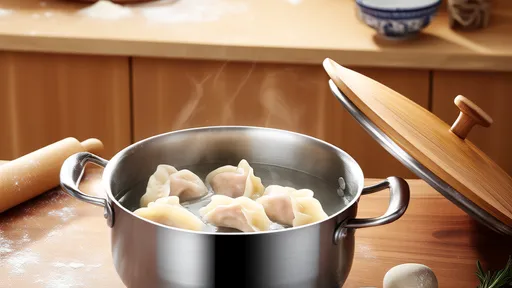
In kitchens across China, a culinary ritual unfolds with the quiet precision of a practiced dance. The steam rises from the large pot, the water at a furious, rolling boil. One by one, the plump, crescent-shaped dumplings slide into the bubbling cauldron. For the uninitiated, this is the moment anxiety spikes—the dreaded threat of a ruptured wrapper, a burst seam, leaking precious filling into the water, turning a potential masterpiece into a disappointing pot of soup. Yet, for generations, home cooks and master chefs alike have wielded a simple, almost poetic piece of culinary wisdom to guarantee perfection. It’s not found in a complex recipe or a high-tech gadget, but in a timeless mantra: bring the water to a boil, add a dash of cold water twice, then cover and let steam for one final minute.
This technique, passed down through whispers over stoves and demonstrated by grandmothers to their grandchildren, is far more than mere superstition. It is a profound application of food science, a method of precise thermal management that respects the delicate nature of the dumpling’s skin. The goal is not simply to cook the dumpling through, but to do so in a way that strengthens its structure, gently sets the filling, and achieves that ideal textural contrast—a resilient, slightly chewy wrapper giving way to a juicy, flavorful interior. The failure to control this process results in the all-too-common kitchen tragedy: a wrapper that, weakened by excessive and aggressive boiling, splits at its seam, allowing its contents to escape. The perfect dumpling, therefore, is a testament to controlled power, a lesson in patience and understanding the elements at play.
The journey to dumpling perfection begins long before the water even heats up. The foundation is, unquestionably, the wrapper itself. A well-made dough is your first and most crucial defense against breakage. It requires a specific balance of wheat flour and water, kneaded to a smooth, pliable consistency that is neither too tough nor too fragile. This dough must be strong enough to contain the expanding forces within during cooking, yet thin and delicate enough to be a pleasure to eat. The filling, too, plays a critical role. An overly wet filling, bursting with moisture from vegetables like cabbage or chives, can quickly compromise the integrity of the wrapper from the inside out. Seasoned cooks often pre-salt vegetables to draw out excess water or incorporate binding agents like starch or egg into the meat to ensure a cohesive, less watery interior. The act of sealing, the final pinch that creates the iconic pleats, is the last line of defense. Each pleat must be firm, creating an airtight seal that locks the contents in and the water out. A poorly sealed dumpling is a sinking ship waiting to happen, no matter how carefully you boil it.
Now, we arrive at the heart of the matter: the boiling process itself. The standard instruction to "boil until they float" is dangerously incomplete. It is a guideline that often leads to overcooked, bloated, and broken dumplings. The ancient wisdom provides a much more nuanced and effective roadmap. It starts with a vast pot of water. Crowding is the enemy; dumplings need ample room to swim freely without sticking to each other or the pot's sides, as contact friction can easily tear a delicate skin. A generous amount of water also ensures that the introduction of the cold dumplings and the subsequent additions of cold water don’t drop the overall temperature too drastically, maintaining a stable cooking environment.
The water must be at a violent, rolling boil before the dumplings are gently lowered in. This initial shock of intense heat is vital. It quickly sets the exterior starch on the wrapper, creating a slightly firmer outer layer that helps protect the dumpling during the rest of its cook. Almost immediately after the dumplings are in and the water returns to a boil, the first application of cold water is introduced—usually about a half cup for a standard large pot. This is the genius of the method. This cold water shock temporarily halts the boiling action, dramatically lowering the temperature at the precise moment the water is at its most aggressive. This prevents the furious bubbles from physically battering and weakening the dumpling skins. It’s a moment of respite, a cooldown period that allows the heat to penetrate inward toward the still-raw filling without violently attacking the exterior.
The water will inevitably come back to a boil. This is your signal to repeat the process. A second addition of cold water is administered, once again tempering the fury of the boil and providing another period of gentle, penetrating heat. This second intervention is often the difference between a good dumpling and a great one. It ensures the heat has ample time to travel to the very center of the dumpling, thoroughly cooking the filling without the wrapper reaching a point of critical failure. After this second return to a boil, the final phase begins. The heat is reduced to a medium level, and the lid is placed firmly on the pot. This is the "steam and simmer" phase, the one-minute finisher that completes the transformation.
Covering the pot for this final minute fundamentally changes the cooking dynamic. It traps steam, creating a moist, intense heat that envelops the dumplings completely. This atmospheric cooking is exceptionally efficient at transferring energy, ensuring the very top of the dumplings, which may be slightly above the water line, cooks evenly with the submerged parts. The steam gently finishes the cooking process, plumping the dumplings and ensuring the filling is piping hot and perfectly cooked through. This combination of boiling, shocking, and steaming is a holistic approach that treats the dumpling with a respect that a constant, raging boil never could.
To understand why this method is so effective, one must look at the science of starch and protein. A dumpling wrapper is primarily composed of wheat starch and gluten proteins. When exposed to hot water, starch granules absorb water, swell, and gelatinize. This process gives the cooked wrapper its soft, translucent quality. However, if the heat is too intense and prolonged, the starch can over-gelatinize, and the structure can break down, becoming mushy and weak. Simultaneously, the gluten network, which provides strength and elasticity, can be overworked and denatured by relentless boiling, losing its ability to hold everything together. The cold water interventions directly combat this. By periodically reducing the temperature, you control the rate of starch gelatinization and protect the gluten network, allowing it to set strong and resilient rather than breaking down.
Furthermore, the physics of the boiling water itself is a factor. A rolling boil is a violent environment. Large, aggressive bubbles constantly collide with the dumplings, creating physical stress on their surfaces and seams. This mechanical action can be enough to rupture a weakened spot. The addition of cold water calms this chaos. It collapses the large bubbles and temporarily brings the water down to a gentler simmer, eliminating this physical battering and allowing for a much more peaceful cooking process. You are not just controlling temperature; you are controlling the very physical state of the cooking medium.
While the "two cold water, one-minute steam" technique is the gold standard for a classic boiled dumpling, its principles can be adapted. Some modern cooks, equipped with digital thermometers, aim to maintain a specific water temperature just below a rolling boil (around 190-200°F or 88-93°C) for the majority of the cooking time, achieving a similar effect of gentle heat. However, the traditional method requires no special equipment and embodies an intuitive understanding of cooking physics. It is a technique that celebrates the duality of the elements—the aggressive power of fire and boiling water tempered by the calming, controlling influence of cool water and trapped steam. It is a dance between Yin and Yang, resulting in a perfect, unbroken dumpling, a simple yet profound culinary achievement.
By /Aug 20, 2025
By /Aug 20, 2025
By /Aug 20, 2025
By /Aug 20, 2025
By /Aug 20, 2025
By /Aug 20, 2025
By /Aug 20, 2025
By /Aug 20, 2025
By /Aug 20, 2025

By /Aug 20, 2025
By /Aug 20, 2025
By /Aug 20, 2025
By /Aug 20, 2025
By /Aug 20, 2025
By /Aug 20, 2025
By /Aug 20, 2025
By /Aug 20, 2025
By /Aug 20, 2025
By /Aug 20, 2025
By /Aug 20, 2025
