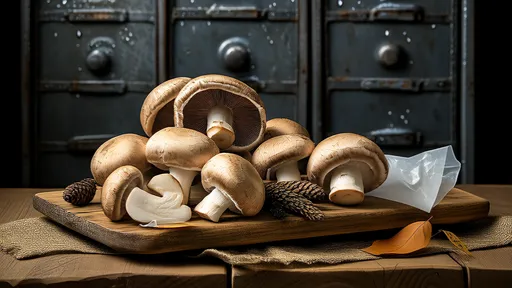
Mushrooms, with their earthy flavors and versatile culinary applications, are a staple in kitchens worldwide. However, their high moisture content and delicate nature make them notoriously perishable. Improper storage can quickly lead to slimy textures, dark spots, and the unwelcome growth of mold, turning a gourmet ingredient into compost fodder in a matter of days. For home cooks and professional chefs alike, mastering the art of preservation is key to minimizing waste and maximizing flavor. While countless methods are touted online, from soaking in salt water to vacuum sealing, one technique stands out for its simplicity, effectiveness, and accessibility: the humble paper bag in the refrigerator.
The science behind this method is elegantly straightforward and hinges on understanding the mushroom's fundamental relationship with moisture. Fungi are over 90% water. This inherent dampness is a double-edged sword; it gives them their succulent texture but also creates an ideal environment for spoilage microorganisms, particularly bacteria and mold, to thrive. The primary goal of any storage method, therefore, is not to add moisture but to manage its escape in a controlled manner. This is where the paper bag proves its superiority over common alternatives like plastic containers or cling film.
Plastic is the enemy of fresh mushrooms. Sealing them in an airtight plastic container or bag is a recipe for rapid deterioration. As the mushrooms respire, they release moisture vapor. Trapped inside a plastic prison, this moisture has nowhere to go, creating a humid microclimate that essentially steams the mushrooms from their own exhalations. This accumulated condensation pools around them, accelerating microbial growth and leading to that characteristic slimy decay. The lack of airflow further suffocates them, promoting anaerobic processes that can cause off-flavors.
Enter the paper bag. This simple tool is perfectly engineered for the task. Paper is porous, allowing for a continuous, gentle exchange of air. This passive ventilation is crucial. It allows the excess moisture released by the mushrooms to wick away through the bag's walls, preventing it from accumulating on the surface of the caps and stems. Instead of being trapped in a swampy environment, the mushrooms reside in a slightly dry atmosphere that discourages the proliferation of mold and bacteria. The bag acts as a buffer, maintaining a stable humidity level that is dry enough to prevent spoilage but not so arid that it causes the mushrooms to desiccate and shrivel prematurely.
The refrigerator provides the second critical component: cold temperature. Chilling significantly slows down all biological and chemical processes. It reduces the respiration rate of the mushrooms, meaning they release moisture and consume their internal energy stores much more slowly. It also dramatically inhibits the metabolic activity of spoilage organisms. The combination of cold from the refrigerator and moisture-wicking from the paper bag creates a synergistic preservation effect, extending the mushroom's prime edible state for up to a week, sometimes longer, depending on the initial freshness.
Preparation before storage is just as important as the method itself. Never wash mushrooms before storing them. Introducing additional water is counterproductive and defeats the entire purpose of the paper bag technique. If your mushrooms have visible dirt or substrate clinging to them, the best practice is to gently wipe each one with a slightly damp paper towel or use a soft-bristled brush (a dedicated mushroom brush is ideal) to dislodge any particles. For stubborn bits, you can quickly rinse them under cold running water just before you are ready to use them, but they must be patted completely dry with a clean towel immediately afterward. Storing wet mushrooms is a direct invitation to mold.
It is also wise to give your mushrooms a quick inspection. If you notice any that are already significantly bruised, slimy, or showing signs of mold, remove them immediately. One bad mushroom can act as a spoilage accelerant, spreading mold spores and bacteria to its neighbors. A little curation at the start can save the entire batch.
The execution of this method is beautifully simple. Place your clean, dry mushrooms loosely in a standard brown paper lunch bag. Do not pack them in tightly; they need room to breathe. There is no need to close the bag tightly either. Simply fold the top over once or twice to create a loose closure that still allows for air exchange. Then, place the bag in the main compartment of your refrigerator. Avoid the crisper drawers for this purpose, as these are designed to maintain a higher humidity level to keep leafy vegetables fresh—precisely the opposite of what mushrooms need. The colder, drier air of the main fridge area is perfect.
For those who may not have paper bags on hand, there are acceptable alternatives. A cloth produce bag, made of breathable material like cotton or linen, can function similarly. Another effective method is to place the mushrooms in a single layer on a tray or baking sheet lined with a few layers of paper towels. The paper towels will absorb the excess moisture. Then, cover the mushrooms loosely with another layer of paper towel to protect them from picking up other fridge odors. This open-tray method can be very effective but requires a bit more fridge space.
Different mushroom varieties, from delicate chanterelles and porcini to hearty portobellos and common white buttons, all benefit from this core principle of cool, dry, breathable storage. The paper bag technique is a universal solution. By embracing this straightforward approach, you honor the ingredient. You preserve its texture, its complex umami flavor, and its nutritional value. It is a small shift in routine that yields significant results: less food waste, more spontaneous culinary opportunities, and perfectly preserved mushrooms ready to elevate any dish they grace.
By /Aug 20, 2025
By /Aug 20, 2025
By /Aug 20, 2025
By /Aug 20, 2025
By /Aug 20, 2025
By /Aug 20, 2025
By /Aug 20, 2025
By /Aug 20, 2025
By /Aug 20, 2025

By /Aug 20, 2025
By /Aug 20, 2025
By /Aug 20, 2025
By /Aug 20, 2025
By /Aug 20, 2025
By /Aug 20, 2025
By /Aug 20, 2025
By /Aug 20, 2025
By /Aug 20, 2025
By /Aug 20, 2025
By /Aug 20, 2025
