In the heart of Italy’s shoemaking tradition, where cobblestone streets echo with centuries of craftsmanship, one family has quietly perfected the art of hand-welted footwear. For three generations, the Sartori family has stitched their legacy into every pair of shoes they create, resisting the tide of mass production with an almost devotional commitment to the hand-stitched welt—a technique that defines not just their craft, but their identity.
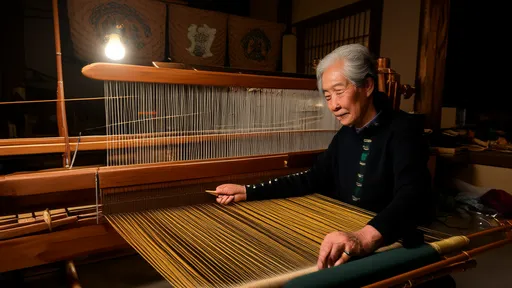
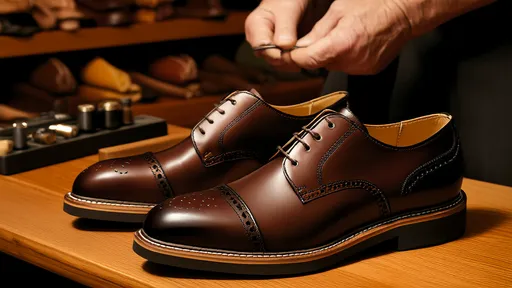
The Sartori workshop, nestled in the leather-working district of Florence, is a time capsule of patience and precision. Here, the rhythmic pull of thread through leather is the only sound that breaks the silence. Antonio Sartori, the current patriarch, learned the craft from his father, who in turn learned from his. "The welt is the soul of the shoe," Antonio says, running a calloused finger along the edge of a half-finished Oxford. "It’s what binds everything together—literally and metaphorically."
Hand-stitching a welt is a grueling process. Unlike machine stitching, which can be done in minutes, the traditional method requires hours of meticulous labor. Each puncture is made with a curved awl, the thread pulled taut by hand to ensure an airtight seal between the insole and outsole. The result is a shoe that molds to the wearer’s foot over time, gaining character with age. "People think luxury is about shine and brand names," says Antonio’s daughter, Giulia, who now oversees design. "But real luxury is something that outlives you. These shoes will still be here in 50 years, telling our story."
The family’s defiance of modern shortcuts has come at a cost. While factories churn out glued soles by the thousands, the Sartoris produce fewer than 200 pairs a year. Their clients—a mix of old-money Europeans and discerning collectors from Tokyo to New York—wait up to eight months for an order. "We’re not just selling footwear," Antonio explains. "We’re selling the weight of time."
Giulia recalls childhood summers spent sweeping leather scraps from the workshop floor, watching her grandfather’s hands tremble as he worked. "He’d say the tremors made his stitches more human," she laughs. That philosophy persists today. Minor asymmetries—a slightly uneven stitch line, a faint tool mark—are left intentionally visible. "Perfection is cold," Giulia says. "We want people to see the hand that made them."
As younger generations flock to sneaker culture, the Sartoris face an existential question: adapt or vanish? Their answer lies in a single display case at the back of the workshop. Inside rests a pair of 1947 wingtips, worn by Antonio’s father on his wedding day. The leather is cracked, the soles worn thin, but the welt stitching holds firm. "This," Antonio says, "is why we don’t change."
The family’s stubbornness has become their signature. When a Japanese conglomerate offered to buy their patterns for mass production, Antonio refused over espresso served in chipped cups. "They wanted the look without the life," he shrugs. Instead, he’s teaching Giulia’s eight-year-old son to distinguish calfskin from cordovan by touch alone. The boy’s small hands already know how to hold an awl.
At dusk, when the workshop’s single bulb casts long shadows, you might catch Antonio running his thumb along a finished sole. It’s a gesture both proud and anxious—the quiet acknowledgment that their art hangs by a thread. But for now, that thread is still being stitched, one deliberate puncture at a time.

By /Aug 1, 2025

By /Aug 1, 2025
By /Aug 1, 2025

By /Aug 1, 2025

By /Aug 1, 2025
By /Aug 1, 2025
By /Aug 1, 2025
By /Aug 1, 2025
By /Aug 1, 2025

By /Aug 1, 2025

By /Aug 1, 2025

By /Aug 1, 2025

By /Aug 1, 2025

By /Aug 1, 2025
By /Aug 1, 2025
By /Aug 1, 2025

By /Aug 1, 2025
By /Aug 1, 2025
By /Aug 1, 2025
By /Aug 1, 2025
